Blog

Hogs to H.O.Gs- The French Broad River Road

Long before interstates or railroads connected Asheville and Newport, farmers faced a challenge: getting their goods to market. The fertile valleys of the French Broad River and Cocke County produced an abundance of food that was in demand as far south as Charleston, SC.

A Fertile Land: Corn and Hog Farming

In 1874, Joseph Buckner Killebrew, a Tennessee Bureau of Agriculture agent, wrote about the area’s incredible potential:

“These are exceedingly fertile valleys, the soil equal to any in the State. It is alluvial and deep. With anything like fair cultivation, it will produce from fifty to one hundred bushels of corn to the acre.”

Much of the corn grown in Cocke County wasn’t used for milling or distilling. Instead, it was used to fatten hogs, which were then sold to markets throughout the South. Hogs are voracious eaters, and the corn yields in the river plains of Big Creek and the French Broad River were plentiful.

In contrast, the plantation farmers in Georgia and South Carolina focused on crops like cotton and rice, selling them in large cities or even globally. These plantation owners needed pork to feed the workers who planted, tended, and harvested their crops. And so, the famous hog drive through Cocke County was born.

The Hog Drive: A Journey to Asheville

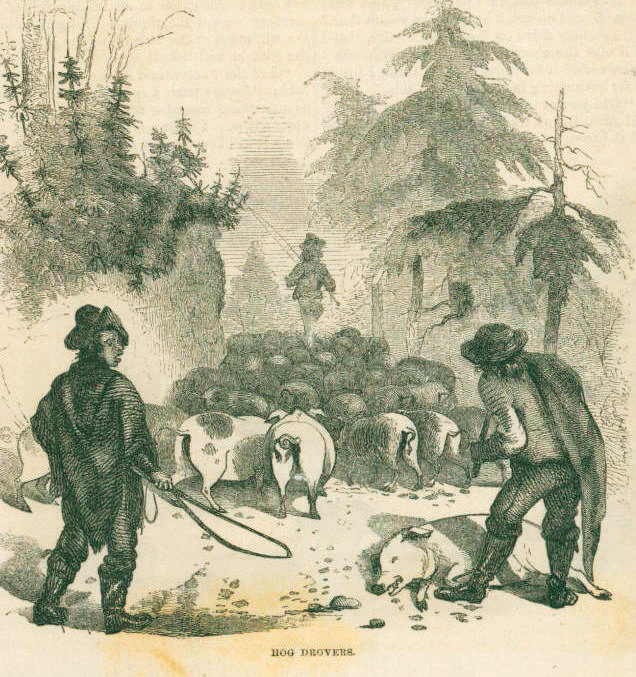
Each year, beginning in early November, the hog drive would begin along the dusty road parallel to the French Broad River. Farmers would move their hogs in groups, heading to Asheville to sell them to plantation owners or slaughterhouses. A drover could move his herd about 10 miles a day, keeping the hogs on the move with loud calls like:

Soo-eey,” “Su-boy,” or “Ho-o-o-yuh.”

Along the route, inns with pens and feed for the hogs were common, and sometimes the drovers would rest at these inns, possibly even spending the night.

One such inn, Wolf Creek Inn, stood near where Wolf Creek flows into the French Broad, south of Del Rio. This route became so famous for the hog drives that Asheville even erected a statue of walking hogs downtown, commemorating the city’s connection to this porcine economy.

The End of the Hog Drive Era

By 1880, the completion of the railroad between Newport and Asheville made the long road journey a thing of the past. The once-bustling hog drives faded into history.

Today, the 25 E Highway between Newport and Hot Springs, NC is part of the East Tennessee Crossing Byway, a national scenic byway. Interestingly, this same road is now popular with motorcycle clubs, especially those riding Harley-Davidson bikes—colloquially known as Hogs. The legend goes that a Harley-Davidson racing team adopted a hog as their mascot, and the name has stuck ever since.

Sooey!

Already have a login ? 

Login

Please login to your account.

Create Your Account
Read more

Newport: A City History Shaped by Transportation

Nestled on the north side of the Great Smoky Mountains is the quiet city of Newport Tennessee. Bordered by rivers, a train track, and divided by a state and federal highway, the city can be easily overlooked. But a glance into its past reveals a historic era from the late 1700’s forward worth exploring.

Cocke County Tennessee embodies a rich history of the pioneers who settled the area. The first town, Old New Port was formed in 1799 when John Gilliland, the first settler of Cocke County, donated fifty acres of land to build the town two years after Cocke County was established. New Port was thus named because it was a new port on the French Broad River. Fines Ferry, the former crossing for the French Broad River, no longer exists, and while much has changed, a few pieces of history still remain. But this history may be told differently depending on who you speak to in the present Newport.

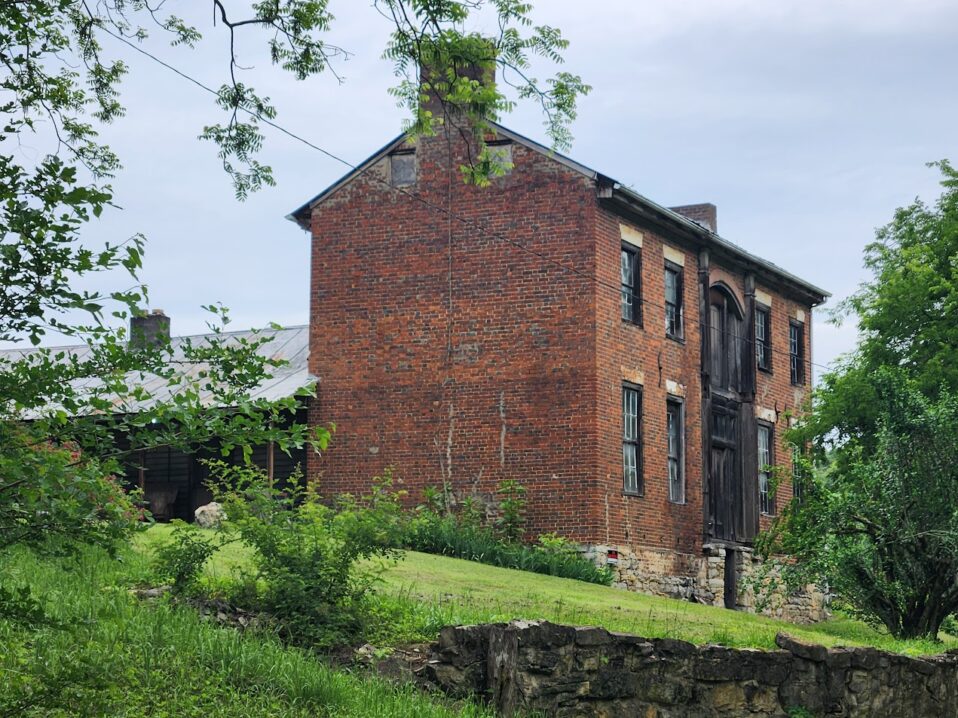
The O’Dell house, the oldest structure still standing, is residential and has been declared an historic site. The building dates back to 1813 and was built by Abel Gilleland, son of John Gilleland, who settled in the area in 1783. The house is the primary physical reminder of the once bustling town of Old New Port. It is a significant architectural example of the type of residence built by men of prominence in early East Tennessee and is still occupied by descendants of the original owners. Few of this type of structure can still be found in this area.

Local resident, Edward Walker was born, raised, and still lives in Newport. As the history of the area goes, Walker is as much an historian as any. A former school teacher, now retired, Walker is a fount of information.

“The railroad arrived at the tiny village of Clifton in 1867,” said Walker. “This is when the controversy to move the county seat really revved up.”

Walker says you had the Cliftonites on one side and those living in New Port on the other. Whoever had the majority on the county legislative body would vote to move the county seat back and forth between the two. This happened at least three times. Finally, in 1884 the Tennessee Supreme Court ruled that the county seat could be on the Pigeon River in what was the village of Clifton. The name followed and what once was Clifton became New Port. If that isn’t confusing enough, Clifton was also once known as Gorman’s Depot. But in 1884 all three converged to become the county seat with the name of Newport. The original courthouse in Newport did not survive a fire so many of the original records and photographs are lost.

By August of 1869 the railroad had extended as far east as Wolf Creek. A stagecoach was required at this point if you wanted to go to Hot Springs or Asheville. There was no crossing by railroad until 1882. The earliest existing Newport on the Pigeon map only dates back to 1887.

A discerning eye, with help from a local historian, can spot a few original buildings. The railroad tracks still run through town but are now used for freight only. The original main building of Newport Grammar School is the oldest, continually used, elementary school building in the state of Tennessee.

Walker says the town hit a boom in the 1950’s and 1960’s. Capitalists once looked to come to small towns when starting an industry. “Everyone had big ideas and talked big but wanted to build their business on the backs of the locals. The businesses would succeed but often moved elsewhere after a time.”

Following the route of state road 25E, the East Tennessee Crossing Byway is an 83-mile national scenic byway that links Cumberland Gap and to the Great Smoky Mountains National Park. The drive follows the old river road pathway to Asheville and Hot Springs, and runs directly through the town of Newport.

The design plan and completion of Interstate 40 cut a path through Cocke County and Newport. As with most highway system builds, downtowns lost their sense of purpose and direction when industry, and then commerce fled to the areas along highways. Newport was no different.

But Walker says the town is making a comeback. “Downtown Newport looks better now than it has for some time,” said Walker. “We have new businesses coming to town.”

Following the lead of many larger cities, Newport is finding its way back to purpose with the renaissance of new businesses.  Newport makes for a great stopover for a cup of coffee, an ice cream treat, or a short walk around downtown to view the remaining historic buildings before trekking on to the Great Smoky Mountains.


Already have a login ? 

Login

Please login to your account.

Create Your Account
Read more

Wilma Dykeman- A Legacy of Conservation

Newport’s and Cocke County’s history is woven together with the stories of Appalachian life, mountains, rivers, and the people who lived here.

If you don’t know this name- Wilma Dykeman- you should.   Author, conservationist, activist, and historian, Ms. Dykeman’s legacy in Cocke County touches the very water we drink, fish, and play in, while her writing have captured the imagination of so many who come to visit the Smokies.

She chronicled the French Broad as a river, a watershed, and a way of life where yesterday and tomorrow meet in odd and fascinating harmony. And how was she to know, that her assertion that environmental sensitivity can encourage broad-based economic development without risking the balance between nature and commerce.

Her romance with Appalachia’s beauty and with her future husband led her to the ribbon cutting dedication of the Great Smoky Mountain National Park on Oct 2, 1940.  A month later, she would marry and eventually move to her husband’s family home in Newport, TN along the bluffs of the Pigeon River.   Her life’s work is marked by her legacy.

Read more about the work of this incredible woman here.

Already have a login ? 

Login

Please login to your account.

Create Your Account
Read more

The Secret’s Getting Out — Cocke County’s A Winter Fishing Wonderland

It may be old news to some, but newcomers are learning all the time that Newport and the surrounding countryside is an angler’s paradise.

Most local anglers are well aware how good the fishing gets when the weather is warm. But even life-long natives might be surprised to learn that some catches don’t get really hot until the colder temps have driven most people off the water for the year.

November through March is a prime stretch of calendar to bounce jigs for arguably the best-tasting fish swimming in Tennessee Valley waters.“We are getting close to being in some of the best walleye and sauger fishing of the year,” Derek Kinsler, who runs Smoky Mountain Fishing Co. guide service, said as October drew to a close. “And that lasts all the way until April.”

Walleye and sauger are both prehistoric-looking members of the perch family, and are arguably more prized for their plump, delectable filets than any game fish lurking in the waters of North America.

Elusive and wily, walleye and sauger possess darkness-piercing vision that enables them to mercilessly hunt the cold, dark depths of moving and still waters alike. When Smoky Mountain bears start getting sleepy, these fearsome-toothed predators are wide awake and on the prowl all winter long.

Adding to the angling excitement during the season of shorter days is improved trout fishing. Falling water temperatures often stimulate trout feeding activity, and they also start venturing down into lower elevations, making it a choice time of year for fly-casting enthusiasts.

The waters in all directions surrounding the Cocke County seat are renowned for their catches — but what about Newport proper?

“Oh, Lord yeah! We catch a lot of big fish right through downtown Newport,” reveals Kinsler, a born-and-raised East Tennessee lunker hunter who keeps otherwise tight-lipped about the especially fishy places he slips in his boat.

Kinsler is based in Jefferson City and ventures with clients throughout the Volunteer State’s Appalachian mountains and valleys — using either traditional tackle or fly gear. He feels especially at home on the French Broad, Pigeon and Nolichucky Rivers, as well as Douglas Lake.

“We go all over the area,” he said. “I float water all the way from Del Rio to Cosby to Newport to Johnson City, Bristol and Knoxville.”

The vibrant Tennessee Valley guide industry not only plays a vital role in enhancing the experience of visiting anglers, these personal fishing scouts and trainers also nudge clients to sink some dollars in locally owned businesses, especially food and beverage and lodging establishments.

While Kinsler might not reveal his favorite places to put fish in the net, he freely communicates precise destination-coordinates to fellow fisher-folks (or anybody else) angling for a good meal in Cocke County.

Forget for a bit about casting flies or flipping baits and go fox hunting instead, he advises: try tracking down the Fox and Hound in Newport or Del Rio’s Fox Den, which serves “by far the best breakfast in East Tennessee,” Kinsler reports.

Kinsler also counsels hungry clients to take a growling stomach out to The Woodshed in Newport — and when in need of a bite in Bybee, he often gets reeled into CJ Papadops.

To book an unforgettable angling trip with Derek, visit www.smokymountainfishing.com or call 865-310-4076.

Complete your day of angling with a meal and at any of these restaurants.


Already have a login ? 

Login

Please login to your account.

Create Your Account
Read more

Day trippin’ in Cocke County TN- Parrotsville

Cocke County is filled with historic sites to see such as the Swaggerty Fort in Parrottsville.

Tucked in the northeast corner of Cocke County, the average traveler would not necessarily find Parrottsville, unless they were driving from Newport to Greensville. Along the way, a traveler would discover that Parrottsville is one of the oldest towns in Tennessee dating back to 1780, a decade before Tennessee became a state and just a few years post American Revolution.

The original settlers of Parrottsville came from Germany.  Two properties are listed on the National Register of Historic Places, the Yett Ellison House (1857) on Main St and the Swaggerty Block House  just north of the downtown on 321 along Clear Creek.

A controversy regarding the  date of the structure and purpose was debated until 2009.  Blockhouses were fortifications built on edges of the western frontier to protect settlers and to protect Indian lands.  The name Swaggerty dates back to an early settler- James Swaggerty, around the time of 1787.  Conflict between the settlers and Native Americans were heightened due the Indigenous People’s alliance with the British during the Revolutionary War, and with the repeated breaking of land treaties by settler expansion onto tribal lands.

While the Swaggerty blockhouse has features of a frontier blockhouse, research conducted by graduate student,  D Mann, University of TN in 2009* proved that the building was likely built in 1860 by land owner and farmer, Jacob Stephens.

*https://trace.tennessee.edu/cgi/viewcontent.cgi?article=7592&context=utk_gradthes

Already have a login ? 

Login

Please login to your account.

Create Your Account
Read more

Newport Harvest Street Festival Oct. 4-5, 2025: Harvesting Memories

Bringing with it an atmosphere of nostalgia and a chance to create new memories, the Newport Harvest Street Festival has for 38 years served as a premier East Tennessee community celebration event

Heralding the onset of fall and launching the start of Cocke County’s annual season of weekend festivals, the Street Festival strikes a cheerful balance between old and new.

Many of the vendors and participants have been returning year after year, becoming an integral part of the festival’s identity. This continuity is essential for the festival’s charm, as it allows visitors to relive cherished memories. Whether it’s savoring a favorite treat from a familiar food stall or reconnecting with long-time friends, the Newport Street Festival has a unique ability to transport attendees back in time.

But what makes this festival truly exceptional is its capacity for  renewal, year after year. Alongside the familiar faces, there are new vendors, attractions, and activities waiting to be discovered. This delicate blend of tradition and innovation is what keeps the festival fresh and exciting. It’s a testament to the organizers’ commitment to providing a diverse and engaging experience for both long-time attendees and first-time visitors.

“We’ve got vendors that have been coming for as long as I know and  before, and then we’ve always got new ones,” said Lynn Ramsey, Cocke County Chamber of Commerce director and an organizer of the event since 2008. “We have everything from crafts and Christmas and fall decorations to children’s toys. Some people are selling different kinds of stones and herbs and handcrafted soaps and a lot of handmade arts and crafts. A lot of churches will come and give away information, and sometimes they give away free stuff like bottles of water to drink.”

If the weather is beautiful and the sun graces the streets of downtown Newport with its warm glow, turnout can run as high as 6,000 people or more. Clear blue skies and crisp autumn air set the stage for a weekend filled with laughter, music, and delicious food.

Food trucks and tasty treat-serving tents line the streets and fill the air with the enticing aromas of all your favorite festival snacks and beverages, from fresh squeezed lemonade, corn dogs and spiral taters to funnel cakes and deep-fried desserts.

And of course, no Tennessee festival would be complete with music, and the Newport Street Festival always serves a wonderful variety guaranteed to get your body moving to the sweet beats and lively melodies. Make sure to see all the lovely ladies and babies that come to compete to be 2024’s Harvest Queen in their appropriate age division. Children up to 16 years of age will compete in pageants according to their age bracket. The ever-popular Miss Newport Harvest Festival, for females ages 16-21 years old, will be the last pageant of the day. All pageants will be on the Broadway side of the Courthouse lawn on Saturday at 10:30 am.

The Newport Harvest Street Festival is a testament to the enduring spirit of close-knit community and the power of Appalachia traditions. It’s a place where locals and visitors alike come to relive old memories and create new ones, where the past and present seamlessly merge in a celebration of life in Cocke County.

Already have a login ? 

Login

Please login to your account.

Create Your Account
Read more

Cocke County’s Century Farms Highlight TN Agricultural Heritage

“Century Farms” are an essential part of the Tennessee Heritage Farms Program. Administered by the Center for Historic Preservation at Middle Tennessee State University, the program recognizes and works to conserve farms that have remained in the same family and in continuous agriculture production for 100 years or more.

About 2,100 such farms have been certified across the Volunteer State — a dozen of them in Cocke County:

  • Baxter Farm, 1875
  • Bible Farm, 1887
  • Dwight L. Bundy Farm, 1907
  • Heritage Farms, 1849
  • Jim and Alice Freeman Gulf Farm, 1910
  • Leibrock Farm, 1886
  • M.G. Roberts Poplar Tree Farm, 1859
  • Neas Farm, 1885
  • Oakleaf Farm, 1902
  • Ottinger Farm, 1894
  • Pitts Farm, 1897

River Dale Farm, established in 1794, is also a designated Pioneer Century Farm, meaning that its operation dates back to the founding of the State of Tennessee in 1796 or before.

“Despite drought, floods, the Civil War and the Great Depression, these families have remained tillers of the soil, persevering where others have failed,” wrote state historian Carroll Van West in his 1986 book, “Tennessee Agriculture: A Century Farms Perspective.”

The Tennessee Heritage Farms Program plays a crucial role in preserving rural culture and regional identity – especially in small, mostly-rural counties like Cocke. The program provides educational resources and extension outreach to farm families and the general public, raising awareness of the importance of keeping Tennessee’s agricultural heritage well tended.

The program helps encourage and promote a sense of community pride among the farm families, local historical societies, county extension offices, student groups, city and county governments, and other stakeholder individuals and organizations interested in conserving Tennessee’s countryside and maintaining authentic connections to our cultural roots.

The Heritage Farms Program also aims to promote economic development in rural areas by highlighting the importance of agriculture to the state’s overall economy. Historic farms often attract visitors and tourists who not only appreciate the beauty of the pastoral landscapes, but admire the character, persistence and resourcefulness of Tennesseans who make their livelihoods as producers of civilization’s sustenance.

Given the range of continuing challenges facing today’s farmers, words that Van West penned more than three and a half decades ago — in the midst of the 1980s American Farm Crisis — take on even greater import today: “In a time of agricultural crisis, the legacy of the Century Farmers is a potent reminder that farmers in the past have survived similar hard times to prosper in the future.”


Already have a login ? 

Login

Please login to your account.

Create Your Account
Read more

Cocke County’s Fair Means More than Mere Fun

Cocke County’s Feisty Summer Fair Marks 75 Years of Celebrating Local Culture, Building Community Bonds and Preserving Ties to Rural Life

County fairs are a beloved tradition of late summer, filled with nostalgia, excitement, and friendly competition. Fairs hold a special place in our hearts, with songs, books and movies dedicated to capturing their magic. As we stroll through the fairgrounds, memories of childhood come flooding back – the exhilarating rides of the midway, the tantalizing smells of fair food, and the vibrant displays of animals, canned goods, pies, and other products of country living vying for that esteemed blue ribbon or prize money or, perhaps most coveted, bragging rights.

The history of the modern fair dates back to 1811, when it was established as a platform for farmers to share their innovative farming techniques and foster a sense of community among farming families. It became a friendly battleground where farmers and their families competed for the title of “best of show,” presenting before the community their prized animals and delectable preserves.
Popular media celebrates fairs in small towns.  Consider the fictional town of Mayberry R.F.D when the fair took center stage in several episodes, celebrating everything from beauty pageants to Aunt Bee’s famous pickles. These depictions only served to reinforce the significance of fairs in both small and large communities.

In Cocke County, the first organized fair was held in 1948 at the fairground’s current location. Since then, these friendly community competitions have evolved beyond pickles, pageants, and poultry.  Come to enjoy Gospel Singing, Bluegrass music, tractor pulls, and the midway filled with rides and carnival foods.  The demolition derby and the firemen challenge add an extra dose of excitement to the fair. And this year, as the fair celebrates its 75th anniversary, there will be a celebration of the Century Farms of Cocke County.

County fairs are not just about the attractions and competitions; they are about coming together as a community, celebrating our agricultural heritage, and creating lasting memories. So mark your calendars for August 15-19, 2023 at the Cocke County Fair.

Already have a login ? 

Login

Please login to your account.

Create Your Account
Read more

Local Lure Company Angling for Big Bites

Growing up on Douglas Lake, angler and business owner, Hobie Rice knows a thing or two about fishing lures.    The sport of angling is about so many variables- skill, equipment, fish, and weather.

A lure is as essential as the bait for fish. The first lures were brought to this country by the English settlers.  The lure replaced live bait by mimicking the  “action” of live bait, whether the lure mimics a deep dive, zig-zags, or floats near the surface.  There are dozens of types  and colors of lures to choose from.

At Ledge Hog Fishing Supply in Dandridge, TN, they have reengineered the blade lure for fishing a multiple depths. This is a lure that is popular with professional anglers for its ability to attract trophy size fish.

In May, Cocke County Tourism and Brad Wiegmann from the Fishing Guide Podcast had an opportunity to sit down with Hobie and talk about Douglas Lake fishing and other attractions in Cocke County.  Listen in and get a few “tips” on fishing for the big bite.

If you are heading to Douglas Lake for a fishing trip, stop by Bucks an’ Bass to pick up a Ledge Hog lure.   Find a place to stay here.


Already have a login ? 

Login

Please login to your account.

Create Your Account
Read more

The Legend of the Moon Pie- A Campfire Story

Summer’s sticky sweetness is often celebrated around a blazing campfire with the delicious making of  the confection called ‘smores and the storytelling of tall tales and folk legends.

Here on the Adventure Side of the Smokies, the legend of the Moon Pie is a story worth telling.

Marshmallows and graham crackers are the stuff legends are made of. Near one of the entrances to the sprawling Union Cemetery in Newport, you’ll find the grave of Earl Mitchell, a salesman for the Chattanooga Bakery and the force behind the Moon Pie.  Mitchell was born in nearby Greene County and his travel route brought him to towns in East Tennessee and Kentucky.

According to the company website, Mitchell got the idea for the Moon Pie  after a conversation with a Kentucky Coal miner in 1917.  The miner wanted a snack “as big as the moon” and Mitchell delivered with a snack that would fit in a lunch pail.   A small marker at the foot of Mitchell’s grave gives him credit for “inventing” the Moon Pie.  Quite often folks will leave a Moon Pie and an RC cola at the foot of his grave

Which gooey confection of graham crackers, marshmallow, and chocolate came first?  The Moon Pie was being sold by 1917, and has been continuously produced for over one hundred years.

Legend has it that roasting marshmallows began as early as 1890.  The first recipe for ‘smores appeared as a recipe in a Girl Scout handbook in 1927.

It seems that the irresistible  combination of chocolate, marshmallow, and graham crackers have continued to be a sweet treat for many generations.

Contributed by Clayton Hensley, #knoxroadtripper


Already have a login ? 

Login

Please login to your account.

Create Your Account
Read more